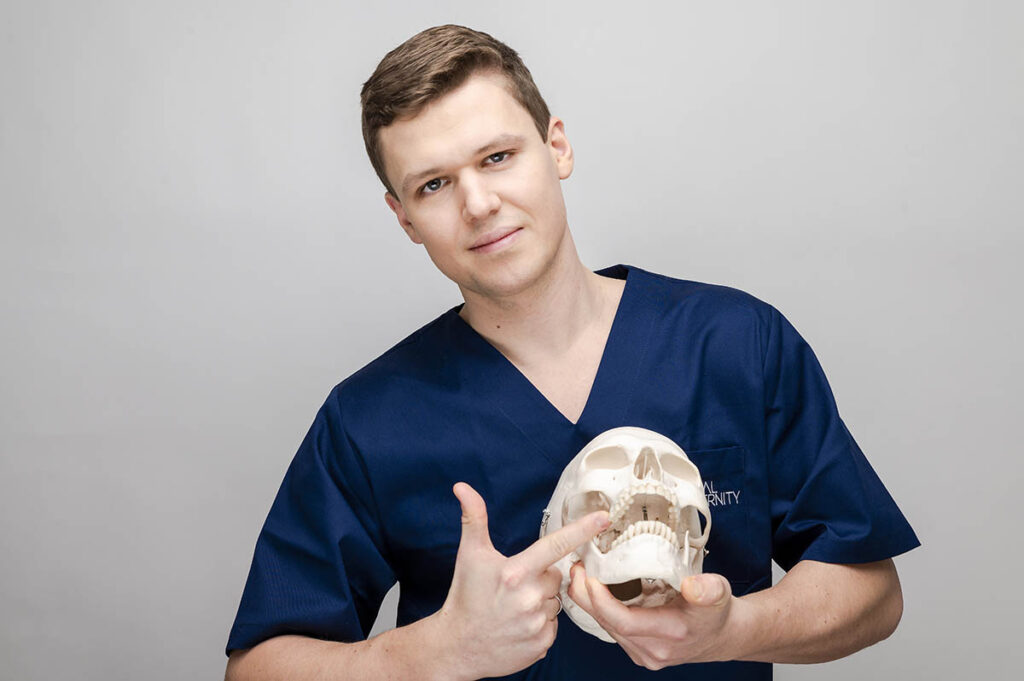
DENTAL PHYSIOTHERAPY AT DENTAL FRATERNITY
Up to 12% of the population suffers from chronic ailments due to dysfunction of the temporomandibular joint. Lock-jaws, crackling, "clicking" while chewing food, migraines, earaches, tooth hypersensitivity - these are just some of the effects of untreated disorders. Regular dental physiotherapy is a prescription for all these ailments. It takes care of the proper work of the masticatory muscles, the placement of the articular disc and the entire joint. Find out more about that.

DENTAL REHABILITATION / DENTAL PHYSIOTHERAPY
During the visit, the physiotherapist conducts a detailed interview and functional examination of the craniofacial area - movement analysis and searching for the causes of the symptoms reported by the patient. These can be different:
- overloaded masticatory system (caused, for example, by the habit of chewing gum),
- wearing braces,
- tooth extraction,
- surgical procedures within the temporomandibular joint,
- bruxism.
Accurate recognition of the source of the problem allows for effective intervention consisting in restoring balance within the muscles that operate the chewing apparatus and programming movement in the joints. Each patient receives a set of exercises and recommendations individually selected for his needs.
BENEFITS OF THE SOLUTION
alleviation of pain symptoms and muscle tension; stopping dental abrasion caused by bruxism